Saturday, January 26, 2013

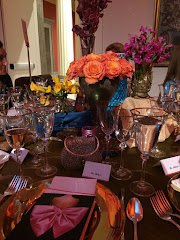
Breakfast at Downton

   Yes, 8 Million Americans and 120 Million Worldwide watchers are obsessed with Britain's Downton Abbey.
   Why? Because in a PG kind-of way, Downton is the new Sex And The City, hitting a pitch perfect chord with its viewers. Simply put: it is nice TV.
   In this British land of the Landed Gentry, these wealthy characters live by the traditional Noblesse Oblige mantra. They are all well dressed, well mannered, polite people. They respect each other, save the occasional slightly naughty character, and they live their lives as we all live our lives. Same struggles. Same goals. All just trying to do better for themselves, their family, friends, and community.

So, here are a few Breakfast at Downton tips:
  • Married ladies, by tradition, are allowed to have breakfast in bed, thus one does not have to dress to go downstairs for breakfast. (I remember my Mother always mentioning 'Breakfast in Bed' as a luxury to her). A nice perk for a married lady indeed!
  • Breakfast consisted of eggs, ham, bacon, devilled kidneys, tongue, oatmeal and "Post Toasties" (Cornflakes) cereal from America!
  • Morning papers were ironed to dry the ink, so the Lord and Lady would not get ink stains on their fingers.
  • Footmen wore gloves and served all meals A La Russe.
  • The most important person or honored guest always sits to the right of the host, or The Lord, and is served first.
  • Serving "Ladies first" is Continental style used on the continent (as in France, not in England).
  • Wealthy girls were taught how to keep a conversation going even with someone who was completely socially incapable, and even at breakfast with the non-morning person!
Downton Abbey like Breakfast at Tiffany's is a place where nothing bad can happen to you. It is simply lovely and beautiful, soapy and sometimes silly, funny and witty, only a bit naughty, Haute Couture and haughty, and most importantly, happy escapism with grand Manor homes and grand manners. No wonder we all adore Downton. Enjoy!

Friday, December 28, 2012

Happy Christmas & Merry New Year's Manners

   Time for Christmas Parties, reflections on the old year and celebrations for the New Year. Dinner and a movie with your beloved, a restaurant lunch with school friends, Church services and coffee after, a Christmas party at a neighbor's home, Aunt Mille's house, Papa Joe and Meema's Condo, Great Grandmother Minnie at the nursing home, New Year's brunch after the hunt in the country, and Christmas supper at the large dining room table with the children, adults and all.
   When should one respond to an invitation? Who says Grace? What does one bring for a Hostess gift? What should one say to Papa Joe? How should one ask for the pepper? How does one ladle the gravy?  These and other answers are listed below:
  •  DO  R.s.v.p. A.S.A.P. R.s.v.p. means "Respondez-vous s'il vous plait", or please respond as soon as you receive your invitation. Put it on your calendar. Hang the invitation up on the fridge in plain sight. Stick to your plan
  • Don't you dare ever show up at some one's home with empty hands. A decent bottle of wine or liquor (not wine in a box), a box of chocolates or cupcakes, homemade cookies or bread, or a danish for breakfast the next morning, a small Christmas Cactus or plant, a bouquet of simple flowers, an antique linen or lace hand towel for the guest bath (can be had at yard sales or estate sales for almost nothing), a wine stopper, or a lovely box of small guest soaps, always work. 
  • If you receive multiple invitations for parties all for the same day and time, decide which party you would like to attend, and R.s.v.p. to all invitations immediately. Please do not wake up the day of all the parties, decide which party you would like to attend, then call in your declines. Caterers must know a head count many days before the event, and the Hostess will have all ready ruled you out as a "no reply." She will also catch on to what you are up to and you may risk being scratched off the list. 
  • Thank your Host upon arrival and upon leaving the party. Hosting any function whether it be in a church basement, Condo or grand home is amazingly time consuming, labor intensive, extremely expensive and exhausting. Hosts work for weeks, if not months, on invitations, menu preparations, decorations, and details inside and outside their homes, gardens and yards to get everything perfectly presentable for their guests.
  • Leave your cell phone in the car. Period.  
  • Arrive on time for Dinner Parties and events that involve services.
  • Arrive no later than the standard "social half hour " for Cocktail and Christmas parties.
  • If you have more than 1 party to attend, work out early departures and late arrivals with each Hostess ahead of time, and quietly enter and exit each party.
  • Be a good guest. Offer to hang up coats, put out food, replace food, be the bartender, or introduce new people around.
  • Keep all conversation light. Like your Mother told you, do not ever discuss religion or politics.
  • Have one dignified, age appropriate "Grace" saying in your head in case you are called upon to say Grace.
  • Ask for both the salt and pepper at once and pass both the salt and pepper at once, anticipating the other person's next need. Offer them to the person on your right as a courtesy.
  • When the dish starts with you before passing your dish to the left, offer the dish to the person on your right as a courtesy, and you will have an immediate new best friend, especially when your dish is warm bread or rolls!
  • Pick up the Gravy Boat and bring the Gravy Boat to your plate, so when you lift the ladle, you will spill the gravy onto your plate, not onto the beautiful tablecloth.
  • A good conversation starter is always:" What was your favorite thing you did today?" or "What was your favorite thing at the event today?"
Relax, and enjoy your Holiday parties with friends and family!

Thursday, October 25, 2012

Lesson in Civility in our Multi-Culti, More Secular Society

LTTE, Elle Magazine, Re: November Issue's Letter From The Editor: "Civility Lesson"

Dear Madam Editor,
   Having taught manners to kids since 1998, I commend you for having your son practice chivalrous behaviors that will take him everywhere in life. Do not be disappointed, however, in the reaction of others, although a coffee shop in any of the extremely expensive, exclusive communities in the Hampton's is not actual American reality, not to mention the $4 coffee. Try a local supermarket, hair salon, dry cleaner, or nursing home in Queens or Garden City.
   Regarding the remainder of your civility letter, we now live in a more secular, more dangerous, multi-culti international celebrity society. With celebrities on the covers of magazines since the 1980's (thanks to Anna Wintour), 24 hour Cable entertainment, screaming Cable talk TV, and the Internet with Facebook and Blogs, everyone can be a critic and celebrity in their own increasingly isolated and anonymous self-created eggshell world.
   We have gotten away from 3 generations of families living together and neighbors taking dinner to other neighbors in need. People buzz in and out of busy, luxury coffee shops, but I do not know why and where they are in such a hurry to go, that they cannot bother to thank a kind child trying to do better. Possibly, we all need to pause, and search our souls for where we want to be in life, as opposed to where the media tells us we need to be in life.
   All I know is that good manners will take one everywhere in life. Civility never goes out of fashion, although it might have been left out on the "Red Carpet" or stored in the Vintage shops at the moment.

Monday, October 15, 2012

Impressions. New Skills. New Messages. How Long Do New Skills Take to Sink In?

First impressions. Second impressions General impressions. How long does it take to make an impression? 1 minute? 5 minutes? 10 minutes? Try 5 seconds.

  • You have 5 seconds to make an impression. 
  • You must practice a new skill for 21 days to start a pattern.
  • It will take 100 days for your new skill to become automatic.
  • A new skill is forgotten in 30 days.
  • Practice is necessary because 66% of a message is forgotten in 24 hours.
  • It takes 8 days of constant reminding for 90% of new information to be retained in 30 days.
 
Little Things
 
It's the little things we do or say
That make or break the beauty of the average passing day,
Hearts, like doors, will open with ease,
To very, very little keys.
And don't forget that two of these
Are "I thank you," and "If you please."

Wednesday, October 10, 2012

America's Sweetheart Was Shirley Temple, Now Our Sweetheart Is Honey Boo Boo...What The Heck Happened?

   This eye popping post popped up on my Facebook "facepage" feed today. After a first laugh, a few seconds later at second glance, the black & white, and color of it all sunk in. I was taken aback. A bit agape. Slightly aghast.
   In 70+ years, or so, we as an American society have gone from watching and "Liking" lovely, dignified, respectful, thoughtful, mannered, lady-like Shirley Temple type role models to watching and liking" undignified, unladylike, and apparently unfiltered type role models such as Honey Boo Boo.   
What the heck happened to us as a society and what type of role models do we now choose? Cynics will say the picture post is just a joke. Calm down. Chill out and don't take this post seriously, but above, or below, the humor, isn't this post a reflection of sorts?
   It is said that 50% of what is said as a joke is considered to be the truth. Those whom we pick as leaders and role models: are they not a reflection of who we admire or want to be?
   We at The Sabot School of Etiquette always say: One does not have to have money to have manners. One must only have self-respect, dignity, determination to be better, and a wherewith all to listen, and learn. Bad manners will take one nowhere in life. Good Manners will take one anywhere and everywhere in life.  

This image is from the Facebook page "Paint The Town Red"
Posted by Picasa

Thursday, October 4, 2012

The Unspoken, Unwritten Language of the Debate

  Debating is merely trying to solve a problem in an organized, civilized manner and format. The debate is a controlled argument with rules. There are High School and College debate rules, the NDT( National Debate Tournament), the CEDA (Cross-Examination Debate Association). There are 4 types of debates: Parliamentary, Lincoln-Douglas (value), Cross Examination, and Academic. There is proposition and opposition, affirmative burden of proof and negative rebuttal, constructive speeches and rebuttal speeches. Reams of books have been written and courses have been taught on how to debate. One could go on forever explaining debating.
   So, what comes across on camera in a debate beyond the spoken word? What does the audience take away from your words other than your words? The answer is: your demeanor, your mannerisms, body language, command of language, knowledge of the subject of debate, general intelligence, character, temperament, and eventually it is your aura we see on screen. Your upbringing. Your very being. Your soul.

The following are simply a few tips for debate:
  • Walk out on stage deliberately and calmly.
  • Politely make eye contact and firmly shake hands with your opponent.
  • Try to be the first to say to your opponent: "It is very nice to see you" which places you psychologically ahead of your opponent. If they answer with the same phrase, say: "Thank you", which again places you psychologically ahead of your opponent.    
  • Stand up straight and place your hands firmly on each side of the podium.
  • Smile with your eyes from your heart.
  • Look your opponent in the eyes when debating. Look alternately at the moderator as well. Look at the audience during your closing point.
  • Speak a bit slower, louder and clearer than you normally do without sounding condescending.
  • Never say "never." Leave yourself an "out."
  • Avoid saying "always." Again, leave yourself an "out."
  • Try not to repeat yourself and switch up your language, phrases and jargon often.
  • Don't say "um", "and" or "uh." Don't pause for too long. Don't rush either.
  • Pace yourself evenly and relax. Try to enjoy the moment and your time on the podium.  
  • Avoid common colloquialisms as people hear them so often, they tune them out. Then, they tune you out.
  • Do not use the "you" message. Using the "You" message sounds accusatory. 
  • Use the "I" message. Using the "I" message sounds more positive.
  • Truisms are better than colloquialisms.
  • Be pithy, succinct, concise and clear.
  • Study your debate topic. Read books, encyclopedias, newspapers, search the Internet, and interview local college and university professors about your topic.
  • Be determined, passionate and strong with conviction.
  • Back up your opinions with facts. Cite your sources.
  • No risk, no return. Competition has its stresses, then its rewards.
  • Do not use humor, unless it is self deprecating. Laughing at yourself shows you have a sense of humor and humility. Laughing at someone else may risk offending them.
  • Use your logic and wit.
  • Don't talk about "woulda, coulda, shoulda."
  • Talk about facts, numbers, data, and specific plans. Then, cite your sources.
  • Be as open, spontaneous and persuasive as possible without becoming too animated or manic.
  • Remember: Just the facts man. Facts, more facts and still more facts. 
  • Clothing is important. Expensive clothing is not necessary, but clean, fitted clothing is a must. One only needs one outfit. Classic, simple Chanel-style clothing always works. Less is more.    
Be positive, positive, positive, and smile. Try to relax, have some fun and enjoy the moment. Talk facts, specific plans, and numbers. Be brief and simple in your answers. Don't get too complicated in your explanations or into too much detail or you will risk getting into the weeds. Stay on point or you will loose your audience. Again, look your opponent in the eyes and smile. :))

Sunday, September 23, 2012

Flag Etiquette and the Sticky Edge of the Envelope

   As a kid of the 1960's, I remember seeing Vietnam War protesters burning the flag, and knew it was wrong. As a Counselor at camp during flag raising, I remember knowing not to hang the flag upside down or drop the flag onto the ground. I also knew the flag had to be folded a certain way. But, did you know there are many other rules regarding the American flag. Some refer to it as the "Flag Code." So, this week when the Obama campaign released its new Obama version of the American flag, I paused and wondered, is this artist's interpretation, rendering, or remake of our American flag proper?

A few American Flag Code rules include:
  • "The flag should be lighted at all times, either by sunlight or by an appropriate light source."
  • "The flag should be flown in fair weather, unless the flag is designed for inclement weather use."
  • The flag should never be dipped to any person or thing. It is flown upside down only as a distress signal."
  • "The flag should never be used for any advertising purposes. It should not be embroidered, printed or otherwise impressed on such articles as cushions, handkerchiefs, napkins, boxes, or anything intended to be discarded after temporary use. Advertising signs should not be attached to the staff or halyard. "
  • "The flag should not be used for any decoration in general. Bunting of blue, white and red stripes is available for these purposes. The blue stripe of the bunting should be on the top."
  • "The flag should never have placed upon it, nor on any part of it, nor attached to it, any mark, insignia, letter, word, figure, design, picture or drawing of any nature."
  • The flag should never be used for receiving, holding, carrying, or delivering anything.
  • The flag should never be used as part of a costume or athletic uniform, except that a flag patch may be used on the uniform of military personnel, fireman, policeman, and members of patriotic organizations.
American flag faux pas by the normal, the rich, the political and the famous have also made the news.
Some examples are:
  • Ralph Lauren 1984 Fall Ready-to-Wear collection shows his now iconic flag sweater.
  • Super Bowl 2004: Kid Rock wore a flag poncho.
  • July 2003: President Bush autographed a small flag.
  • 9-11-2003: President and Mrs. Bush stood on a flag carpet at a Ground Zero ceremony.
  • June 10 in Albania: a man in the crowd watching a parade wears flag shorts.
  • Reno, Nevada, 10-2-2007: The Mexican flag was placed above the American flag on a flagpole at a local bar.
  • January 19, 2009: newly inaugurated President Obama makes available to citizens flags with his image and name overprinted onto the flag.
  • May 31, 2011: MSNBC properly reports a painted flag on the side of Sarah Palin's campaign bus. There is a long unchallenged tradition of politicians using the American flag for campaigning purposes, but it is still against the flag code.
  • March 2012: Democratic headquarters, Lake County, Florida: A flag depicting President Obama's face in the blue field in place of the stars, was removed in response from complaints from local veterans.
Last week, the Obama campaign made available an artist's remake of the American flag with the Obama campaign logo in place of the blue stripes, and blurred and faded out the red stripes. There were no white stripes, they were interpreted as blank or intended in the body of the image. This artist's version of our flag was also available in the shape of the map of the USA.

What are your thoughts about this use of our American flag? Is it pushing the sticky part of the edge of the envelope?

"No disrespect should be shown to the flag of the United States of America."
"The flag represents a living country and is itself considered a living thing."

Flag Code information gathered from: www.ushistory.org/flag
                                                              www.usa-flag-site.org
                                                              click on 'American Flag Etiquette' link