Friday, December 28, 2012

Happy Christmas & Merry New Year's Manners

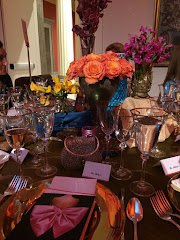
   Time for Christmas Parties, reflections on the old year and celebrations for the New Year. Dinner and a movie with your beloved, a restaurant lunch with school friends, Church services and coffee after, a Christmas party at a neighbor's home, Aunt Mille's house, Papa Joe and Meema's Condo, Great Grandmother Minnie at the nursing home, New Year's brunch after the hunt in the country, and Christmas supper at the large dining room table with the children, adults and all.
   When should one respond to an invitation? Who says Grace? What does one bring for a Hostess gift? What should one say to Papa Joe? How should one ask for the pepper? How does one ladle the gravy?  These and other answers are listed below:
  •  DO  R.s.v.p. A.S.A.P. R.s.v.p. means "Respondez-vous s'il vous plait", or please respond as soon as you receive your invitation. Put it on your calendar. Hang the invitation up on the fridge in plain sight. Stick to your plan
  • Don't you dare ever show up at some one's home with empty hands. A decent bottle of wine or liquor (not wine in a box), a box of chocolates or cupcakes, homemade cookies or bread, or a danish for breakfast the next morning, a small Christmas Cactus or plant, a bouquet of simple flowers, an antique linen or lace hand towel for the guest bath (can be had at yard sales or estate sales for almost nothing), a wine stopper, or a lovely box of small guest soaps, always work. 
  • If you receive multiple invitations for parties all for the same day and time, decide which party you would like to attend, and R.s.v.p. to all invitations immediately. Please do not wake up the day of all the parties, decide which party you would like to attend, then call in your declines. Caterers must know a head count many days before the event, and the Hostess will have all ready ruled you out as a "no reply." She will also catch on to what you are up to and you may risk being scratched off the list. 
  • Thank your Host upon arrival and upon leaving the party. Hosting any function whether it be in a church basement, Condo or grand home is amazingly time consuming, labor intensive, extremely expensive and exhausting. Hosts work for weeks, if not months, on invitations, menu preparations, decorations, and details inside and outside their homes, gardens and yards to get everything perfectly presentable for their guests.
  • Leave your cell phone in the car. Period.  
  • Arrive on time for Dinner Parties and events that involve services.
  • Arrive no later than the standard "social half hour " for Cocktail and Christmas parties.
  • If you have more than 1 party to attend, work out early departures and late arrivals with each Hostess ahead of time, and quietly enter and exit each party.
  • Be a good guest. Offer to hang up coats, put out food, replace food, be the bartender, or introduce new people around.
  • Keep all conversation light. Like your Mother told you, do not ever discuss religion or politics.
  • Have one dignified, age appropriate "Grace" saying in your head in case you are called upon to say Grace.
  • Ask for both the salt and pepper at once and pass both the salt and pepper at once, anticipating the other person's next need. Offer them to the person on your right as a courtesy.
  • When the dish starts with you before passing your dish to the left, offer the dish to the person on your right as a courtesy, and you will have an immediate new best friend, especially when your dish is warm bread or rolls!
  • Pick up the Gravy Boat and bring the Gravy Boat to your plate, so when you lift the ladle, you will spill the gravy onto your plate, not onto the beautiful tablecloth.
  • A good conversation starter is always:" What was your favorite thing you did today?" or "What was your favorite thing at the event today?"
Relax, and enjoy your Holiday parties with friends and family!

Thursday, October 25, 2012

Lesson in Civility in our Multi-Culti, More Secular Society

LTTE, Elle Magazine, Re: November Issue's Letter From The Editor: "Civility Lesson"

Dear Madam Editor,
   Having taught manners to kids since 1998, I commend you for having your son practice chivalrous behaviors that will take him everywhere in life. Do not be disappointed, however, in the reaction of others, although a coffee shop in any of the extremely expensive, exclusive communities in the Hampton's is not actual American reality, not to mention the $4 coffee. Try a local supermarket, hair salon, dry cleaner, or nursing home in Queens or Garden City.
   Regarding the remainder of your civility letter, we now live in a more secular, more dangerous, multi-culti international celebrity society. With celebrities on the covers of magazines since the 1980's (thanks to Anna Wintour), 24 hour Cable entertainment, screaming Cable talk TV, and the Internet with Facebook and Blogs, everyone can be a critic and celebrity in their own increasingly isolated and anonymous self-created eggshell world.
   We have gotten away from 3 generations of families living together and neighbors taking dinner to other neighbors in need. People buzz in and out of busy, luxury coffee shops, but I do not know why and where they are in such a hurry to go, that they cannot bother to thank a kind child trying to do better. Possibly, we all need to pause, and search our souls for where we want to be in life, as opposed to where the media tells us we need to be in life.
   All I know is that good manners will take one everywhere in life. Civility never goes out of fashion, although it might have been left out on the "Red Carpet" or stored in the Vintage shops at the moment.

Monday, October 15, 2012

Impressions. New Skills. New Messages. How Long Do New Skills Take to Sink In?

First impressions. Second impressions General impressions. How long does it take to make an impression? 1 minute? 5 minutes? 10 minutes? Try 5 seconds.

  • You have 5 seconds to make an impression. 
  • You must practice a new skill for 21 days to start a pattern.
  • It will take 100 days for your new skill to become automatic.
  • A new skill is forgotten in 30 days.
  • Practice is necessary because 66% of a message is forgotten in 24 hours.
  • It takes 8 days of constant reminding for 90% of new information to be retained in 30 days.
 
Little Things
 
It's the little things we do or say
That make or break the beauty of the average passing day,
Hearts, like doors, will open with ease,
To very, very little keys.
And don't forget that two of these
Are "I thank you," and "If you please."

Wednesday, October 10, 2012

America's Sweetheart Was Shirley Temple, Now Our Sweetheart Is Honey Boo Boo...What The Heck Happened?

   This eye popping post popped up on my Facebook "facepage" feed today. After a first laugh, a few seconds later at second glance, the black & white, and color of it all sunk in. I was taken aback. A bit agape. Slightly aghast.
   In 70+ years, or so, we as an American society have gone from watching and "Liking" lovely, dignified, respectful, thoughtful, mannered, lady-like Shirley Temple type role models to watching and liking" undignified, unladylike, and apparently unfiltered type role models such as Honey Boo Boo.   
What the heck happened to us as a society and what type of role models do we now choose? Cynics will say the picture post is just a joke. Calm down. Chill out and don't take this post seriously, but above, or below, the humor, isn't this post a reflection of sorts?
   It is said that 50% of what is said as a joke is considered to be the truth. Those whom we pick as leaders and role models: are they not a reflection of who we admire or want to be?
   We at The Sabot School of Etiquette always say: One does not have to have money to have manners. One must only have self-respect, dignity, determination to be better, and a wherewith all to listen, and learn. Bad manners will take one nowhere in life. Good Manners will take one anywhere and everywhere in life.  

This image is from the Facebook page "Paint The Town Red"
Posted by Picasa

Thursday, October 4, 2012

The Unspoken, Unwritten Language of the Debate

  Debating is merely trying to solve a problem in an organized, civilized manner and format. The debate is a controlled argument with rules. There are High School and College debate rules, the NDT( National Debate Tournament), the CEDA (Cross-Examination Debate Association). There are 4 types of debates: Parliamentary, Lincoln-Douglas (value), Cross Examination, and Academic. There is proposition and opposition, affirmative burden of proof and negative rebuttal, constructive speeches and rebuttal speeches. Reams of books have been written and courses have been taught on how to debate. One could go on forever explaining debating.
   So, what comes across on camera in a debate beyond the spoken word? What does the audience take away from your words other than your words? The answer is: your demeanor, your mannerisms, body language, command of language, knowledge of the subject of debate, general intelligence, character, temperament, and eventually it is your aura we see on screen. Your upbringing. Your very being. Your soul.

The following are simply a few tips for debate:
  • Walk out on stage deliberately and calmly.
  • Politely make eye contact and firmly shake hands with your opponent.
  • Try to be the first to say to your opponent: "It is very nice to see you" which places you psychologically ahead of your opponent. If they answer with the same phrase, say: "Thank you", which again places you psychologically ahead of your opponent.    
  • Stand up straight and place your hands firmly on each side of the podium.
  • Smile with your eyes from your heart.
  • Look your opponent in the eyes when debating. Look alternately at the moderator as well. Look at the audience during your closing point.
  • Speak a bit slower, louder and clearer than you normally do without sounding condescending.
  • Never say "never." Leave yourself an "out."
  • Avoid saying "always." Again, leave yourself an "out."
  • Try not to repeat yourself and switch up your language, phrases and jargon often.
  • Don't say "um", "and" or "uh." Don't pause for too long. Don't rush either.
  • Pace yourself evenly and relax. Try to enjoy the moment and your time on the podium.  
  • Avoid common colloquialisms as people hear them so often, they tune them out. Then, they tune you out.
  • Do not use the "you" message. Using the "You" message sounds accusatory. 
  • Use the "I" message. Using the "I" message sounds more positive.
  • Truisms are better than colloquialisms.
  • Be pithy, succinct, concise and clear.
  • Study your debate topic. Read books, encyclopedias, newspapers, search the Internet, and interview local college and university professors about your topic.
  • Be determined, passionate and strong with conviction.
  • Back up your opinions with facts. Cite your sources.
  • No risk, no return. Competition has its stresses, then its rewards.
  • Do not use humor, unless it is self deprecating. Laughing at yourself shows you have a sense of humor and humility. Laughing at someone else may risk offending them.
  • Use your logic and wit.
  • Don't talk about "woulda, coulda, shoulda."
  • Talk about facts, numbers, data, and specific plans. Then, cite your sources.
  • Be as open, spontaneous and persuasive as possible without becoming too animated or manic.
  • Remember: Just the facts man. Facts, more facts and still more facts. 
  • Clothing is important. Expensive clothing is not necessary, but clean, fitted clothing is a must. One only needs one outfit. Classic, simple Chanel-style clothing always works. Less is more.    
Be positive, positive, positive, and smile. Try to relax, have some fun and enjoy the moment. Talk facts, specific plans, and numbers. Be brief and simple in your answers. Don't get too complicated in your explanations or into too much detail or you will risk getting into the weeds. Stay on point or you will loose your audience. Again, look your opponent in the eyes and smile. :))

Sunday, September 23, 2012

Flag Etiquette and the Sticky Edge of the Envelope

   As a kid of the 1960's, I remember seeing Vietnam War protesters burning the flag, and knew it was wrong. As a Counselor at camp during flag raising, I remember knowing not to hang the flag upside down or drop the flag onto the ground. I also knew the flag had to be folded a certain way. But, did you know there are many other rules regarding the American flag. Some refer to it as the "Flag Code." So, this week when the Obama campaign released its new Obama version of the American flag, I paused and wondered, is this artist's interpretation, rendering, or remake of our American flag proper?

A few American Flag Code rules include:
  • "The flag should be lighted at all times, either by sunlight or by an appropriate light source."
  • "The flag should be flown in fair weather, unless the flag is designed for inclement weather use."
  • The flag should never be dipped to any person or thing. It is flown upside down only as a distress signal."
  • "The flag should never be used for any advertising purposes. It should not be embroidered, printed or otherwise impressed on such articles as cushions, handkerchiefs, napkins, boxes, or anything intended to be discarded after temporary use. Advertising signs should not be attached to the staff or halyard. "
  • "The flag should not be used for any decoration in general. Bunting of blue, white and red stripes is available for these purposes. The blue stripe of the bunting should be on the top."
  • "The flag should never have placed upon it, nor on any part of it, nor attached to it, any mark, insignia, letter, word, figure, design, picture or drawing of any nature."
  • The flag should never be used for receiving, holding, carrying, or delivering anything.
  • The flag should never be used as part of a costume or athletic uniform, except that a flag patch may be used on the uniform of military personnel, fireman, policeman, and members of patriotic organizations.
American flag faux pas by the normal, the rich, the political and the famous have also made the news.
Some examples are:
  • Ralph Lauren 1984 Fall Ready-to-Wear collection shows his now iconic flag sweater.
  • Super Bowl 2004: Kid Rock wore a flag poncho.
  • July 2003: President Bush autographed a small flag.
  • 9-11-2003: President and Mrs. Bush stood on a flag carpet at a Ground Zero ceremony.
  • June 10 in Albania: a man in the crowd watching a parade wears flag shorts.
  • Reno, Nevada, 10-2-2007: The Mexican flag was placed above the American flag on a flagpole at a local bar.
  • January 19, 2009: newly inaugurated President Obama makes available to citizens flags with his image and name overprinted onto the flag.
  • May 31, 2011: MSNBC properly reports a painted flag on the side of Sarah Palin's campaign bus. There is a long unchallenged tradition of politicians using the American flag for campaigning purposes, but it is still against the flag code.
  • March 2012: Democratic headquarters, Lake County, Florida: A flag depicting President Obama's face in the blue field in place of the stars, was removed in response from complaints from local veterans.
Last week, the Obama campaign made available an artist's remake of the American flag with the Obama campaign logo in place of the blue stripes, and blurred and faded out the red stripes. There were no white stripes, they were interpreted as blank or intended in the body of the image. This artist's version of our flag was also available in the shape of the map of the USA.

What are your thoughts about this use of our American flag? Is it pushing the sticky part of the edge of the envelope?

"No disrespect should be shown to the flag of the United States of America."
"The flag represents a living country and is itself considered a living thing."

Flag Code information gathered from: www.ushistory.org/flag
                                                              www.usa-flag-site.org
                                                              click on 'American Flag Etiquette' link

Thursday, September 20, 2012

4 Easy Steps For Writing A "Thank-you" Note

   Procrastinating writing the dreaded "Thank-you" note? Writing your note is not hard if you break your task up into 4 easy steps.
   In general, all "Thank-you" notes should be hand written within 24 hours. "Thank you" e-mail notes are slowly becoming more acceptable among close friends and family. However, older generations still enjoy receiving their "Thank-you" notes by snail mail. A "Thank-you" note should be written even if you receive a gift in person and verbally thank the gift giver. All "Thank-you" notes should be age appropriate and on age appropriate stationery. Check your sentence structure, grammar and spelling. A heartfelt "Thank you" should always be intrinsic within the body of your note. The words "Thank you" need not be on the outside of the note. Please do not ever begin your "Thank-you" note with "Thank you for the..." unless you are 6 years old. Parents may also, of course, help their children write "Thank-you" notes as this practice is fantastic training for a mannerly and eloquent life later on as an adult.

4 steps towards a completed "Thank-you" Note:
  1. "Dear ________,"
  2. "We had such a nice time seeing you last night in your lovely home (thank the host for their hospitality and including you)" or "Just loving my (insert gift)." (Describe how you have used, displayed or worn your gift).
  3. Now you may write: "Thank you for including us"..."Thank you for thinking of us..." or "Thank you for the..." 
  4. "Fondly", "Sincerely" or "Love" (sign your name)

   Remember, the best "Thank-you" notes come from the heart. You are done! See, wasn't that easy?!

Tuesday, September 18, 2012

Do You Possess Diplomatic Skills?

The Sabot School of Etiquette touches on one of the definitions of a Diplomat which is:
"Doing nothing and saying nothing nicely." - Unknown

Diplomacy is a bit more difficult to define. The following is a list of quotes describing diplomacy:

  • "Diplomacy is thinking twice before saying nothing." - Unknown
  • "Diplomacy is the art of letting someone have your way." - Daniele Vare
  • "There are people who can do all fine and heroic things but one: keep from telling their          happiness to the unhappy." - Mark Twain
  • "Be polite: write diplomatically; even in a declaration of war one observes the rules of politeness." - Otto von Bismarck
   Diplomats have been around since the Greek and Roman Empires. When we speak of diplomats, we are usually talking about international diplomats and international diplomacy.
   To be a diplomat, one must possess many different charismatic manners, leadership skills and more specific skills including: tact, listening, sensitivity, positive body language, and politeness. One must also pause and reflect. One must listen and be able to arbitrate a mutually acceptable solution to the problem at hand, accept the result, and move on to solve the next challenge. One must remain non-confrontational, yet quietly strong and competent.
   One must also have a sense of humor, but humor is tricky. Humor does not always translate well, especially internationally. Self-deprecating humor is usually the best type of humor to show because you risk offending no one but yourself!
   Also, sometimes not talking or not answering is just as important as talking and answering. What is unspoken and unwritten is sometimes just as important as what is spoken and written.
   Whether one is negotiating an international treaty or negotiating nap time with your Mother, calm, steady, polite demeanor combined with a peace of heart wins out in the long run every time.

Bon chance!

Wednesday, September 12, 2012

Great Leaders, Example and Lip Service

   All effective leaders should strive to lead by example through not only their words but their behavior. The unintended consequences of a leader's behavior does subjectively rain down upon those who listen. When leaders say one thing and do another, it is not only dishonest but disheartening.
   Yes, leaders make mistakes. No one is perfect. Things do not always work out all the time, every day, all day long, but, the general intent of a leader should be clear and honorable.
   There are many types and levels of leaders within our communities and families. A father, an older sister, a Captain of Industry, a Minister of faith, the Lifeguard at the Community Pool, a mother, the privileged, the owner of a small local business such as the dressmaker or dry cleaner, an office manager. What is your level of leadership? What type of example do you set as a leader? How do you inspire others to strive to be better? How do you motivate yourself to be better?
   Especially in today's maximum paced, multi-media, multi-technology, multi-cultural society, the multi-effects of any number of actions or speech from a leader has many multi-effects on the listeners and participants. In other words, ask 20 people in a room what they heard and saw, and you will get 20 different answers. Again, the general intent of the leader should be clear.
   Eleanor Roosevelt famously said: "We teach other people how to treat us." And we really do.
   Being a leader is hard. Leaders set an unspoken tone through their actions. Leaders have to be able to communicate and state your case, then listen to all those who oppose your case. There will also be those persons who did not understand your case, or were not fully listening and only heard parts of your case, or only heard what they wanted to hear, or took offense to your case. Leaders should try to patiently explain their case. They also should strive to unite and include through their words and actions. If your words do not match up with your actions, your words are eventually heard as empty, lip service.
   Leaders should strive to inspire people. Leaders should be positive, kind, charitable, and forgiving. We should all treat others as we wish to be treated. There is always room to say; "I'm sorry." There is always a chance to say: "I have failed." It is through failure that leaders learn, adjust and succeed.

Thursday, August 30, 2012

What Makes A Good Leader?

   Here at The Sabot School of Etiquette, we touch on leadership and include a few tips in our written materials we send home with each student. We famously say: "Leaders always make others feel special." What makes a good leader? What makes a great leader? Let's start with the basics.
  • Leaders always make others feel special. Leaders make the other person feel as though they have been heard. Leaders make the other person feel like the only person in the room.
  • Leaders lead by example. If you as a leader do one thing and say another, your followers are listening to lip service. Lip service leads to mistrust.  
  • Leaders know ignorance is no excuse. As children, we make excuses because we are learning and our parents give us a childhood of chances so we may learn year by year to make good decisions for ourselves. As adults, we cannot say we did not know. As adults, it is our responsibility to know.
  • Learning to be a leader, if you do not fail a few times, you are not trying hard enough. You may not be making competent, correct decisions for yourself. Failing is good for us because failing forces us to reevaluate our positions and decisions, and move on. 
  • Leaders do not blame other people. Blaming other people for your position in life is ignorant and gets you no where. We all make 1000 different decisions every day about how we are going to live our own lives. So, whatever your issue is, it's not your fault. OK, then what? What are you going to DO about it? How are you going to overcome your non-idyllic circumstance? What is your plan to raise yourself out of your circumstance and move forward in your life?  
  • Leaders are always positive. If you try never to say anything negative, no one can say you said something negative. Think about it. Let's face it, who wants to be around someone who is negative and condescending all the time? Don't we all, rather, want to be around someone who is positive? 
   Leading is very hard. It is most challenging. Leading is difficult on a daily basis. Every day, you must wake up ready to make your 1000 decisions and make your case to accomplish your tasks, listen and hear, compromise and compliment, take criticism and kindly give constructive criticisms. It has been said if you ask 20 people in a room what they think, you will get 20 different answers. Taking those 20 different answers and making a plan forward requires diligence, diplomacy and discipline.
   We all look to our leaders to be better than we are. We may at times look to our leaders for guidance. We may see some of our leaders we can best relate to as role models. Who are your role models?   

Friday, August 24, 2012

The R.s.v.p., the "and Guest", Family Behaviour, & Wedding Crashing

   In light of the recent alleged Kennedy wedding crashing by Taylor Swift with her boyfriend Conor Kennedy, I thought it would be a good time to discuss the R.s.v.p.
   Allegedly, Conor Kennedy did not R.s.v.p. to his cousin, Victoria Gifford Kennedy, the Mother-of-the-Bride, when invited to a family wedding. Instead, he texted his cousin 1 hour before the wedding ceremony was to begin asking her if he could attend AND bring his famous girlfriend. She responded with a text clearly stating "Please do not come." The real question here is: Why did Conor not R.s.v.p. to the family wedding, and did Conor's invitation say "and Guest" or not.
  Even within families, believe it or not, there are rules of behavior that should be adhered to, or one ends up the inconsiderate, "bomb throwing" relative no one wants to deal with but has to invite out of respect for the family.   
   Clearly, Conor Kennedy, raised in high society and 18 years of age, is old enough to know better than to pull this stunt. He showed zero respect for his family who were nice enough to respect him and invite him to the family wedding. Conor should have known that for a sit down dinner, seating charts are worked out many weeks in advance.  Tables are set by the wedding planner the night before the event. As well, now days, there is a modern "Reply Card" and stamped envelope one needs only to tick off and drop in the mail by a certain "R.s.v.p. By" date.
  Apparently, when The-Mother-of-the-Bride asked Conor not to attend, he chose to completely ignore her and came to the wedding with his famous girlfriend, Taylor Swift. According to Mrs. Kennedy, after the couple arrived, she greeted them, and as politely as she could, asked them to please leave, twice. Allegedly, Miss Swift walked right past her as if she was not present.
  To be fair, Miss Swift may or may not have known she was not invited. However, she should have known her fame would cause an unwanted disruption at a wedding and may potentially take attention away from the Bride. Possibly a bit of a "bomb thrower" herself, she should not have accompanied her boyfriend last minute to this family wedding.  
   Y'all remember the R.s.v.p. Respondez-vous S'il Vous Plait. Or, please respond. Please do respond as soon as you receive the written snail mailed invitation or the e-vite/e-mail on your computer.
   Do not wait for your computer program to send you reminders that you have not responded. Do not wait for the Mother-of-the-Bride to call up your lazy, sorry, unorganized self and ask if you are coming to the wedding, or not.
   As a Registered Bridal Consultant, I can tell you there are two types of wedding customers. Those who immediately send in their R.s.v.p., then come in to purchase their wedding gifts as soon as they received the invitation (67%), and those pain in the rear, bomb throwing customers who, on the way to the wedding, silmoutaneously R.s.v.p and fly in the door in a panic to purchase a last minute gift for the Bride (33%). Then, these chaotic nincompoops have the gaul to complain that everything on the Bridal Registry is all ready filled. Really? Ya think? All I can say is some people love  and thrive on chaos, and if they do not have chaos present in their lives, they create chaos for themselves so they may wallow in it and in their minds, continue to thrive.
   Listen up. Weddings are very expensive and require lots of time consuming work from many family members, especially from the Mother-of-the-Bride. The family goes through many months of planning and tons of trouble to give their guests a memorable, meaningful ceremony and a delicious and entertaining Wedding Sit Down Dinner or Wedding Reception.
   Get your head out of your own egg shell of a world and get your act together. Prioritize your social schedule and social life and send in your R.s.v.p. A.S.A.P.!!   

Thursday, June 28, 2012

Girl Power for the Summer


Girls Just Want To Have Fun!

From my book: "Forget-MeN-ot, Forget-Me-Never, Remember The Fun We Had Together"
Happy July 4th to all:))

Saturday, June 9, 2012

George Washington's Rules of Civility: # 11- 20

According to The Civility Project*, George Washington's Rules of Civility & Decent Behaviour In Company and Conversation are attributed to a Jesuit Priest from around the 16th Century. Washington ended up with his own shorter version of these rules totalling 110.
The following are Washington's Rules of Civility #11-20, followed by The Sabot School of Etiquette's modern interpretation:

11. Washington: "Shift not yourself in the sight of others, nor gnaw your nails."

11. SSOE: Do not stretch out in public or bite your nails. I once saw a gentleman at breakfast with his entire family stretch his arms out while in his chair and he hit the waitress delivering 2 trays of food to his table. She toppled over, falling and dropping both trays of food all over their table, the gentleman and the floor. An all around mess and so embarrassing for the gentleman.

12. Washington: "Shake not the head, feet, or legs. Roll not the eyes, lift not one eyebrow higher than the other. Wry not the mouth, and bedew no man's face with your spittle by approaching too near when you speak."

12. SSOE: Don't fidget, roll your eyes, raise your eyebrow, or purse your lips at another person. Also, don't be a "close talker." People want the news, not the weather. The old Victorian rule during Afternoon Tea used to be "Do not touch your head." Notice how the Queen of England neither fidgets nor makes any facial gestures while in public. She also does not touch her head. She does not scratch her nose or place her hair behind her ears. Quite sure she does not spit while talking either. Try not touching your head during a meal. It is harder than it looks!

13. Washington: "Kill no vermin such as fleas, lice, ticks, & etc., in the sight of others. If you see any filth or thick spittle, put your foot dexterously upon it. If it be upon the clothes of your companions, put it off privately, and if it be upon your own clothes return thanks to him who puts it off.

13. SSOE: Don't kill bugs in front of others. Discretely, place your foot over any dirt. If you see a friend with fuzz on his or her clothes, discretely tell them or brush it off in private. Always thank someone when they may do the same for you. Always tell a very good friend or spouse they have something in their teeth, or something else that may embarrass them. They will be happy you care about them.

14. Washington: " Turn not your back to others especially in speaking. Jog not the table or desk on which another reads or writes. Lean not upon anyone. 

14. SSOE: In conversation, always try to face the person you are speaking to and in groups, always maintain an inclusive, open forum. Don't jar the table or desk of another person and do not lean on another person. Carefully, get up and down from the dining room table. Be careful not to hit the table with your legs. Don't lean on someone else at a party, unless you are six.

15. Washington: Keep nails clean and short, and your hands and teeth clean, yet without showing any concern for them.

15. SSOE: Pay attention to your ADL's (activities of daily living). Don't fuss with your nails, hands and teeth in public. Please, take a toothpick when leaving the restaurant, but please pick your teeth with the toothpick in the Restroom or in private, not in the parking lot while walking to your car. Yuck. Would you floss your teeth in public? My husband once sat in a lunch meeting filled with owners of large, successful businesses and watched one business owner pull out dental floss after finishing his lunch and floss his teeth. Needless to say, others at the conference table put their forks down and, ready or not, were finished with their lunch.    

16. Washington: Do not puff up the cheeks, loll not out the tongue; (do not) rub the hands or beard, thrust out the lips or bite them, or keep the lips too open or too close(d).

16. SSOE: Public facial gestures give away your emotions that others can see and they may think you are frustrated at them. Plus, fidgeting with your face does not come across well. My Mother always runs her tongue over her teeth under her lips right before a photo is taken, so consequently, many of my photos of her do not show her at her best. Always try to come across as your best.

17. Washington: Be no flatterer; neither play with any that delight not to be played with.

17. SSOE: Do not unabashedly flirt with others unless you mean it and do not play practical jokes on anyone, for any reason, ever. One never knows how others will internalize being flirted with when it is not warranted, and one never knows how someone will take a joke being played on them. In College, I once played a small practical joke on my roommate by putting those Styrofoam "peanuts" inside a few of her sweaters and shoes because her parents had sent her a package with "peanut" stuffing and we were laughing about how much we hated the "peanut" stuffing. Later, I was finding peanut stuffing inside absolutely everything I owned....for weeks. What may seem funny in your own head may not be funny in practice.

18. Washington: Read no letters, books or papers in company; but when there is a necessity for doing so, you must ask leave. Come not near the books or writings of another, so as to read them, unless them unasked. Also look not when another is writing a letter.  

18. SSOE: Do not read a book in a corner when at a gathering with company unless you have expressly asked every one's permission. It is also rude to sit on the train, subway, bus or plane and read over some one's shoulder. 

19. Washington: Let your countenance be pleasant, but in serious matters somewhat grave. 

19. SSOE: Be happy, but do not smile all the time. People may not trust the constant smile. They may think you are hiding something or are not genuine.

20. Washington: The gestures of the body must be suited to the discourse you are upon.

20. SSOE: Any book on body language is worth the price and the read. The language of unspoken and unwritten gestures does matter. Body language matters socially, it matters while in a job interview, it matters once on the job, and body language even matters at home.

* Some sharp students at The University of Virginia are updating George Washington's 110 rules in their own study called: "The Civility Project." For more information on George Washington's rules, writings and papers see: http://gwpapers.virginia.edu

Wednesday, June 6, 2012

The Sorbet Course & Avoiding Brain Freeze

  Bonjour! The word "sorbet" is French for "sherbet". Parlais vous Francais?
  Sorbet is simply fruited ice made from the syrup of fruit. Sorbet is served between courses, usually between the entree and dessert. The purpose of sorbet is to cleanse the palette. Who wants to eat ice cream after having eaten salmon?
 Sorbet can also be served between a fish and a meat course, or simply for a light dessert.  
   When served on a plate with salad, fruit or the meat course, sorbet is eaten with a fork.  If served in a bowl between courses or as a dessert, sorbet is eaten with a spoon. When sherbet or "sorbet" is part of the baked Alaska dessert, or other cake or pie, it is eaten with a dessert fork and dessert spoon.
   No matter how you eat sorbet, just be sure to eat it in small bites or you will give yourself "brain freeze" as the Anne Hathaway character did in the popular movie "The Princess Diaries."
  The sorbet course may be served in a cup, small bowl, or footed dish. The Victorians even had a designated piece of stemware named for the sorbet course. The "Sherbet Dish." This fancy crystal footed Sherbet Dish also may have its own matching plate, and is served with a small demi-tasse sized spoon.
  So, enjoy the warm summer and treat yourself to a cool, simple dessert of "Sorbet."  
 

Friday, May 25, 2012

Memorial Day and the Thin Veneer of Civilization

From my book: "Forget-Me-Not, Forget-Me-Never, Remember the Fun We Had Together: Reminiscences and Memories of New York" 
Soldiers and Sailors Monument
New York City, 1907
Margaret Thatcher, the former Prime Minister of Britain once said: "The veneer of civilization is very thin."

Once a society looses its faith, virtue and civility, how do we get it back?

I say wealth is fragile.

If America looses its wealth, we loose our
free ability to fuel capitalism, thus,
we loose our free opportunities to pursue
"The American Dream."

This Memorial Day, remember our fallen because it is our fallen whom have kept us a free society.

Free to work toward our own American dream for ourselves and our families.

Happy Memorial Day! Remember and Enjoy!

Wednesday, April 25, 2012

Traditional Dinner Protocol at The White House

Our Mothers say to us as children: "Mind your table manners, for one day, you may be invited to the White House for dinner." Well, what if you are invited to the White House for dinner? What is the Protocol? The following are a few tips:
  • Of course, put the rest of your life on hold. Immediately accept the invitation. Being invited for a meal at the White House is a once in a lifetime opportunity.
  • Hand write your response in fine black ink on a fine stationery, folded once. Hand deliver or have delivered by messenger your acceptance as follows: 
Mr. and Mrs. William Wordly
have the honor to accept
the kind invitation of
the President and Mrs. Washington
for dinner on Thursday the twenty-sixth of April
at eight o'clock

  • Study up on the following forms of service. Each President chooses what type of service to use in his White House. Forms of service include:
  •  Service a la russe (1860's style) was whole food paraded around the dining room on decorated platters, then taken into the kitchen, cut up and served. Women are served first. 
  • Service a la russe (Modern style) is a 'gueridon' with a side burner 'rechaud' brought to the table and the dish is prepared in front of the guest. Women are served first. (The Homestead in Virginia still uses this service). 
  • Service a la anglaise  Server presents the arranged platter from left and serves the guests, Women are served first. (This style service allows the host to control the portions offered).
  • Service a la francaise  Guests serve themselves from the presented platter. Women are presented the platter first. (The Dominican Republic uses this style of service).    
  • Service American Style  Food served already on plate.
  • Buffet style service has been recently added to the forms of service used at the White House (former President Clinton added this style of service).
  •  Arrive at least a few minutes early, and quickly assemble in the Blue Room. Do not linger around in the Foyer or Drawing Room. Exactly like a European court, the President and the First Lady of the Land will descend the Blue Room stairs promptly at eight o'clock.
  • When spoken to, one must refer to the President as "Mr. President." One may vary one's answers with "Sir."
  • In conversation, always refer to the President as "President Washington", never just plain "Washington," as this practice is considered bad form and is disrespectful of the office. 
  •  Refer to the wife of the President as Mrs. Washington, and treat her as you would any formal hostess. 
  • Do not sit down until the President and First Lady are seated.
  • Touch nothing (not even your napkin) until the President and First Lady place their own napkins on their laps. 
  • Place cards will dictate where one sits. If the place card is on top of your plate, place it first to your right, then later, to your left. This way, you will be sure to talk to the person on your right and on your left during your meal. 
  • No one gets up during the meal. Not even to the "Powder Room."
  • No alcohol is served during the meal.
  • The menu is simple and neutral due to many food allergies.
  • Most meals are 4 courses. Each course lasts about 20 minutes. Pace yourself to finish your course neither first nor last.
  • There is no bread and butter plate and no bread or butter served (messy).
  • Sauces served on foods, if at all, are kept to a minimum (drippy).
  • Garlic is never used (lingering bad breath).
  • Never leave the table until the President and First Lady have withdrawn from the room.
  • After the meal, there may be a different venue such as music in the Music Room, and one may have the chance to have your photograph made with the President. Thanks to the thoughtfully planned menu, one can be sure to have decent breath, and no bread-crumbs or sauce on your clothing.
  • Clean or nearly clean your plate, so the chef knows you enjoyed your meal. Roland Mesnier, the Executive Chef for the White House for the past 26 years says: "Plates don't lie." : 
These tips were collected and adapted from:

The Richmond Times Dispatch, September 14, 2011, article: "Savor The White House" by Holly Prestidge, and the book: "Etiquette" by Emily Post, 1937.


Sunday, April 22, 2012

White Dinner Jacket and Tuxedo Etiquette Tips

Going to a Black Tie party this summer in Tuxedo Park, New York? Going to an evening wedding in Newport or Long Island? Maybe just a simple, lovely dinner with your spouse on a special date night. The following are a few practical tips and a few fun tips you may enjoy:))

"Of course, if you want to be very smart, you must not say anything but "dinner coat" --which is quite all right if those you say it to, know what you mean! At all events, the tuxedo is merely the English dinner coat, which was first introduced in this country at the Tuxedo Club to provide something less formal than the swallowtail, and the nickname has clung ever since."

Tuxedo or White Dinner Jacket (Memorial Day through Labor Day only), should be worn to a Formal Black Tie wedding or party from 6:00 p.m. on, although, I have read that Tux may be worn during daylight hours if, and only if, the daylight goes on into an evening wedding reception or party. So, wearing Tux to a 5:00 p.m. or a 5:30 p.m. wedding or party can be done. Best also, as a precaution, to call and ask what the Father of the Bride, Groom and Groomsmen are wearing.
   
**  My husband and I once attended a Virginia wedding in which a formal thermographed, yet as most would consider now to be old fashioned, wedding invitation was sent without a "Reply Card", so the R.s.v.p. had to be hand written. This traditional summer wedding was at 5:00 p.m. at a small church in the country, and the outdoor reception followed at the country home. The Father of the Bride was in White Tie, the Groom and Groomsmen wore Black Tie. 95% of the male wedding guests wore Black Tie. One person showed up in a White Dinner Jacket (more of an eggshell with a shawl collar - very 'Great Gatsby'). The Bridesmaids were in long dresses, and 90% of all the women showed up in thin, silk, short, knee length, day dresses as opposed to Cocktail Suits, or dressy Tea Length dress of which there were few, as the reception was outside and still 90 degrees at night. My husband was properly dressed in a handsome navy summer wool suit with a silk tie, yet felt like a duck out of water, because only about 5% of the other men had on a suit. It was the strangest wedding I have ever been to as far as fashion. Usually, the women are the ones who overdress. Again, best to check out what the wedding party is wearing.

"The shawl collar is supposed to be less formal than lapels."

"The reason for the turned up cuff is to keep clear of mud." 

"A butterfly bow shape is correct in plain black silk or satin. Fancy evening ties are bad form."

"The most practical hat for town wear in winter, both for full-dress and dinner coat, is an opera hat which collapses, instead of the regular high silk one."

"In summer a straw or gray soft hat is proper, whether in town or country."

The tips in italics are from the 1937 book: "Etiquette" by Emily Post, pages 726 and 727.
**Cautionary tale of woe from the author.

Wednesday, April 18, 2012

Who Are You Hungry For As Your Saviour: God or The Government?

   As a teenager, how many times did you hear the expression: "As long as you live under our roof, you must abide by our rules." As an adult, you may say to yourself: "Life is what we make it." In the Science Fiction book and movie: "The Hunger Games," we hear the citizens in this post-apocalyptic society repeating in unison, Gandhi's quote: "You be the change you want to see in the world."
   My 12 year old grand-daughter's favorite part of the book was the heroine's ability to live and survive in the woods, hunting her own food with bow and arrow and knowing which berries, nuts, mushrooms and leaves to eat and which were poisonous. In our book club, we discussed why 30 million copies of this youth book were sold and decided teens liked this story for its protagonist, Katniss Everdeen. We follow alongside Katniss in this topical thriller, witness to her transformation from a strong, self-sufficient teenager just wanting to survive the 'Games', to a virtuous, giving woman, willing to sacrifice her own life for the life of another.
   The story unveils the vices of the government worshiping, game playing, game makers: the citizens of District I. The Capitol, called Panem, after the Latin for 'bread' is supposed to be equal to the other 11 Districts, but clearly it is not. In any equal society, someone has to run it, right? Panem's circus-like citizens look like Lilly Pulitzer gone wild in South Beach. These corrupt citizens unknowingly live out the Hellish Seven Deadly Sins in an Orwellian style, Godless, grand scale Reality TV world. The citizens are rich, and sumptuous buffets of food are always present, yet wasted. These privileged government workers are thin because they are so vein, unlike in the other 11 Districts where food is scarce. Government rations are available, but for a price...your life. Every time you take a government ration of food to feed your family and oil to heat your house, your name is entered into the lottery for another chance to be forced into participation as a "Tribute" for "The Hunger Games." Meanwhile, the pampered citizens of Panem are are overdone on plastic surgery, narcissistic, gluttonous in their appetite for greed, wrathful, envious, and brutally shallow craving constant entertainment.
   The President of the 12 Districts, is dignified, charismatic, and TV ready, yet underneath the surface, is a hypocrite, cruel and divisive. Divide and conquer. He says he shows his citizens a little bit of hope by requiring the 'Games" be viewed by every citizen, but thinks too much hope is dangerous. He sounds like Lenin who referred to his citizens as: "Useful idiots." Too much hope may lead to another uprising against the government and undermine their total control. Those in the Capitol, need the plentiful natural resources of the other 11 dirt poor districts to live their luxurious lives, so control is crucial to their survival.    
   This adventure story shows the physiological 'fight or flight' stress reaction. It delves deep into the woods where wild animals are hunted, whether they be man or beast. It explores hatred for those one does not know, hatred for those in the know, and hatred for the government.
   On a different level, this tale tells a tender story of sacrifice, unrequited love, a love of family and friends, and an acceptance of self.
    In our book club discussion, the subject of why suicide never occurred to any one teen as they struggled for survival during the 'Games' was raised. The conclusion was that there was not enough hope and no faith in any type of afterlife within this secular society. The greatest sin was any sin against the all mighty government. A government that cradled you and initially meant to take care of you from birth to death. Ironically, 74 years later, it controlled uncontrollable things like the weather, the sunrise, and the stars.  
   The Capitol district, called Panem, or the Latin for "bread," sacrifice one boy and girl called "Careers" each year for the games. One of these "Careers" usually win as they each train their entire lives for what they call "their honor" to compete. Like a corporate culture, they all drink the Capitol Kool-aid and eat their cake. These sinful citizens of the capital with their fancy fashion and expensive plastic surgery, look like they should be contestants in their own Reality TV show.
   Ironically, it will be one virtuous boy and girl from the other 11 Districts who will be chosen in a lottery and forced to be the real players of "The Hunger Games." This 74th annual competition, a fight to the death, was conceived by the government and serves as punishment for a past rebellion. It also serves as a reminder the government is in control.
  Throughout this moving story, we hear different characters repeating what becomes a familiar line stated annually by a game official: "May the odds be ever in your favour", as though luck is even an option in any government controlled decision about your life. Unlike Reality TV, the ultimate dirty little secret of any "equal" society totally controlled and ultimately corrupted by any one entity ends up eventually to resemble the familiar Darwinian philosophy: "Live and let live."
  

Monday, March 19, 2012

American "Dollar Princesses", Britain's Cash Poor Aristocracy & The Famous Four Hundred

   In watching the hit TV series "Downton Abbey", I thought the character of the American Lady, Cora Crawley, might be loosely based on the famous teenager, Consuelo Vanderbilt. Everyone has heard the story of this bride married off in 1895 by her Mother to the Duke of Marlborough, thus, saving his estate Blenheim Palace where Winston Churchill was born. I felt sorry for Downton Abbey's "Cora" as I thought she might be the only American chatelaine in Britain.
   As it turns out, over 350 American heiresses were married off to British Aristocracy between the 1890's and WWI. Why? Simple reason. The British Aristocracy needed cash to keep their vast estates, and the daughters of the nouveau rich American Industrialists needed Title.
   As a result of these marriages, 25 Billion US dollars rolled into Britain's economy. Soon, As a result of this huge cash infusion, by the end of the 20th Century, 1/4 of The House of Lords had a transatlantic connection.
   Upon closing the marriage contract, these "Dollar Princesses" received their titles, immediately elevating their social status so they and their families could caper about with the established Mayflower and Main Line dynasties of New York and Philadelphia.
   With the new cash influx, the Landed Gentry of Britain could then keep their large estates with their thousands acres of land and grand houses intact. England was suffering not only from an agricultural depression but from a newly implemented tax called the "Death Duty," similar to our Estate Tax here in the US.
    Who were these American heiresses turned Ladies and Countesses? Well, we have all heard of Consuelo Vanderbilt (Railway heiress), but are y'all familiar with Winaretta Singer (sewing machine heiress), Mary Leiter, (Chicago department store heiress), Jennie Jerome (NY real estate developer heiress), Minnie Stevens and Nancy Astor (hotel heiresses). Even Princess Diana's great-grandmother was an American.
   This influx of transatlantic marriages became so popular, entire industries popped up to accommodate their weddings, wedding trousseaus, lifestyles and needs. One such industry was a quarterly publication called: "The Titled American." This publication became the most popular of many publications for American heiresses looking for husbands, titles and instant social status.
   Back during the turn of the last century with the American Industrial Age, there were 1000 Millionaires living in New York.  Mrs. Astor could only fit 400 people into her ballroom, thus, was born the infamous "Four Hundred." Bottom line, Mrs. Astor would not admit the newly rich Vanderbilt's to her ballroom until Consuelo received her title "Duchess of Marlborough."
   Nancy Langhorne Astor, from Danville, Virginia, was the most accomplished of the "Dollar Princesses." She became the first woman Member of Parliament to take up her seat in the House of Commons. The American "Grand Experiment" saved many of Britain's grand estates!          

Thursday, January 12, 2012

Smarmy, Smart Aleck Snap Judgements and Small Business

   Last weekend over the holiday, a dear relative's jewelry store was robbed. A professional gang of thieves rivaling the movie "Oceans 11" cleaned out this small business owner.
    They broke the lights and surveillance cameras outside the store, cut the electricity and cut the shopping center's phone lines so the store alarm would not go off. Then they pried, sawed, cut, clipped and wedged their way through 2 back doors and a huge iron gate to get inside the jewelry store.
   Once inside the store, the first layer of security kicked in. Thick black smoke permeated the entirety of the store. The thieves waited it out. After the smoke cleared, they removed dozens of trip wires that if tripped on would have caused them to fall into about 50, 10' boards on the floors with 4" nails sticking up out of the boards. These criminals then methodically took up all the boards and piled them neatly up against the edges of the floor of the store.
   Then with high powered, specialized saws, these thugs cut through one 6' tall, large safe with 3 doors and concrete between each door. They also cut into two other smaller safes with these saws.
   These criminals then took the time to hunt, peck and pick out from each display case, every diamond ring, pearl necklace and silver bracelet in the store and pitched each little white and gold display box onto the floor. They must have had a "spotter" across the street as each of the 15 or so display cases had three shelves of merchandise.
   By coincidence, my relative drove by the store apparently on the very evening of the robbery, and all appeared fine, but he did not stop to go inside the store as his wife was with him and they were on their way to a family holiday party. Small miracle.
   When our local paper and local TV media covered this story, they did not focus on the fact that a professionally organized and expertly equipped gang of thieves took what was not theirs. They did not focus on the blessing that no one was killed or injured. They did not focus on the fact that a small business owner and generous contributor to the community for 25 years may now have to close his very popular "Brick and Mortar" jewelry store. They did not focus on the 4 employees who were now each out of a job and the impact their job losses will have on their families. No, the media kept focusing on one perceived negative.
   Because of an armed robbery attempt 17 years ago and great difficulty with a very small claim a few years ago, the owner was forced into a difficult decision: re-new his very expensive insurance (which as those with business experience know, insurance policies may or may not pay off), or be forced to let-go employees, cut employee health insurance coverage, cut hours, cut services, etc.
   Insurance for this small business had become increasingly and so exorbitantly costly, the "Cost of Sales," (yes, it is a Retail formula), was not high enough to reach the desired, small profit margin, so the owner could no longer afford an insurance company policy for his small business.
    The owner, not wanting to lay off employees, especially in today's economic environment, chose instead to install the three aforementioned levels of homemade security, keep his alarm system, and keep all his employees employed.
   How many other small businesses in this country have suffered the same scenario and have been forced into this same difficult decision?
   Next, came the "Top Commenter" under the "Comments" section below the article in the local paper and comments on Facebook and the Bloggers. Some snipped off their smart aleck, smarmy words on the seemingly anonymous Internet with their quick quips and snap judgements having limited snippets of information, never having spoken to the owner and never having shopped in the store. Apparently, their motivation is to appear as though they are the smartest, wittiest, sassiest, most popular persons in the room.  
   Isn't the press supposed to first fully know all the facts, speak with all sources, weigh each fact carefully, then objectively and judiciously report? Is the world so fast now that some in the press have to jump to snap judgements? 
    Then, these uninformed, either/or, black or white, jaded, negative attention seekers, bail out and move onto the next hit story and running victim. The next snarky snap judgement.
   My college Freshman year handbook test boiled down to 4 words: Ignorance is no excuse. Well, one "Top Commenter" said: "He (the owner) deliberately gave up insurance and (inside store) security cameras--he created this reality and now has to live with it." They later commented it was: "easy to keep insurance." Deliberately? Easy? Really? Life is rarely so simple.
   This "Top Commenter" looks from the Profile photo on Facebook to be quite young. Certainly not old enough to have owned and run a small business for 25 years, 6 days a week, 10-12 hours a day, and 16-18 hours a day during holiday seasons. This "Top Commenter" most likely has not had to meet payroll or pay payroll taxes, local taxes, state taxes, federal taxes, rent, lights, CAM charges, or worry.
   Worry if you'll have a good Christmas season so you can re-new your lease. Worry about an employee who is having a hard time with their family. Worry about meeting payroll during slow weeks. Worry if you will be robbed again when inside the store. Worry if the trash was emptied.
  Well, I have one quote for the quick to judge: Judge not, that you be not judge. For with the judgement you pronounce you will be judged, and the measure you give will be the measure you get," Matthew:1:1-2.
     www.timesdispatch.com see article: "Burglars take $2M in inventory from Henrico jeweler" ,"Top Commenter" comment, January 6, 2012